
Products Introduction
Content Introduction
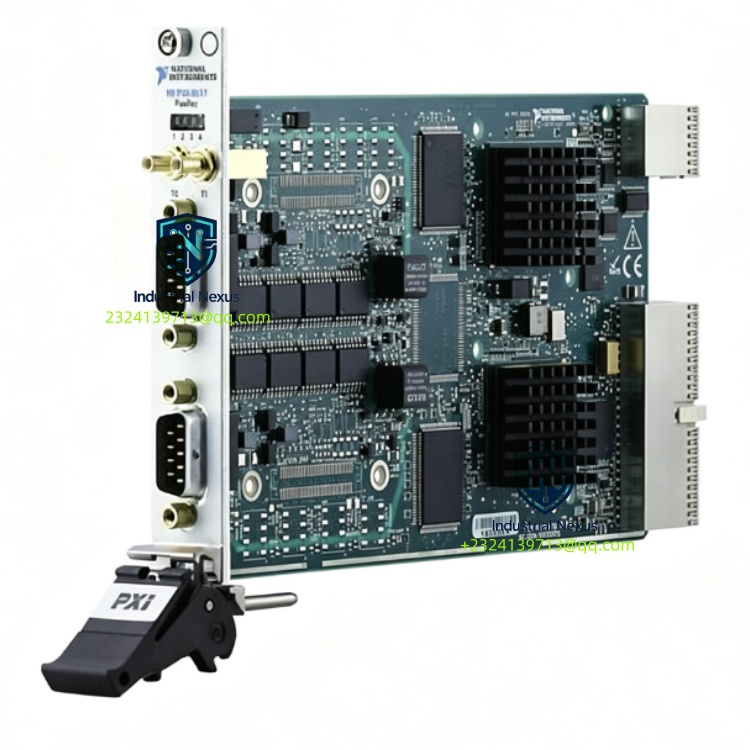
The NI PXI-8517 is an NI-XNET FlexRay communication interface module with two independent channels, designed for PXI and CompactPCI automotive test and real-time simulation systems. It fully complies with FlexRay protocol standards and supports high-speed deterministic bus communication. It is widely used in automotive powertrain and chassis ECU hardware-in-the-loop simulation, bus monitoring, frame logging, rapid control prototyping, fault injection testing and spare replacement for legacy FlexRay test benches.
Product Details
The NI PXI-8517 adopts NI-XNET hardware DMA acceleration architecture, which offloads frame scheduling and signal processing tasks from the host CPU to onboard hardware. This design ensures deterministic, low-latency transmission critical for FlexRay’s time-triggered bus mechanism. It contains two fully independent FlexRay channels, supporting flexible usage modes: connecting a single ECU while providing cold-start node simulation, or connecting two separate FlexRay networks simultaneously without performance loss on each channel.
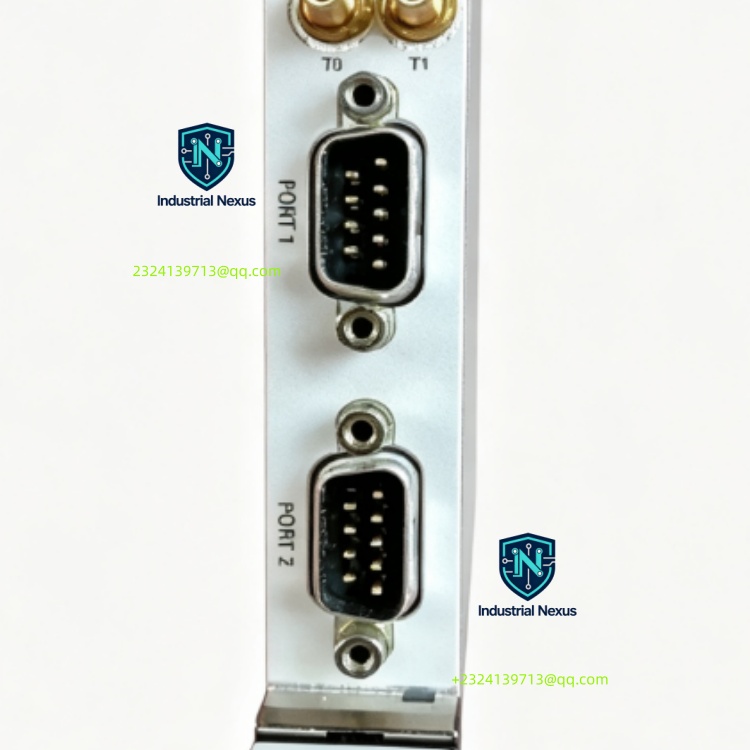
It supports multiple working modes including bus monitor, frame simulation, signal I/O and diagnostic communication. It is compatible with FIBEX database files for signal configuration, allowing engineers to directly work with FlexRay signals rather than raw frames. The module supports synchronization via PXI trigger bus and RTSI trigger lines, and it also provides front-panel sync connectors for timing alignment with oscilloscopes, DMMs and switching modules in multi-instrument test systems. It uses NXP TJA1080 FlexRay transceivers and DB-9 connectors following standard FlexRay pin definition.
The module works with the NI-XNET driver and supports Windows and LabVIEW Real-Time operating systems. Users can configure bus parameters, capture bus traffic and run closed-loop simulation tasks through LabVIEW, TestStand, NI MAX and NI-XNET API. It adopts standard 3U single-slot PXI form factor and draws power directly from the PXI backplane. As a dedicated FlexRay interface, it is the core hardware for developing high-performance FlexRay automotive test systems and is commonly stocked as replacement parts for older vehicle network test stations.
Product Parameters
Communication Standard: FlexRay protocol
Channel Count: 2 independent FlexRay ports
Baud Rate Range: 1 Mbit/s to 10 Mbit/s
Transceiver Chip: NXP TJA1080
Transmission Engine: Hardware DMA, deterministic low latency
Supported Modes: Bus monitor, frame simulation, signal I/O, diagnostic communication
Database Support: FIBEX
Synchronization: PXI trigger bus, RTSI trigger, front panel sync connectors
Connector Type: DB-9 (FlexRay standard pinout)
Max Cable Length: 24 m
Form Factor: 3U PXI single slot
Power Supply: Powered from PXI backplane
Operating Temperature: 0 ℃ to 55 ℃
Storage Temperature: -20 ℃ to 70 ℃
Operating Humidity: 10% to 90% non-condensing
Supported Driver: NI-XNET
Supported Software: LabVIEW, LabVIEW Real-Time, TestStand, NI MAX, NI-XNET API
Compatible Systems: PXI, CompactPCI chassis
Tags: NI PXI-8517 PXI FlexRay interface module NI-XNET FlexRay card automotive FlexRay HIL simulation module
Reliance Electric 57407 AutoMa
Reliance Electric 57406 AutoMa
Reliance Electric 57405 AutoMa
Reliance Electric 57402 115V A